Orientarse en el laberinto de Meta.
Entender el Portafolio de negocio de Meta.
Por Deborah Arpino
La mayoría de los propietarios de negocios gestionan Facebook e Instagram desde el móvil.
La aplicación es solo lo que ves.
Detrás está el Portafolio de negocio de Meta. Aquí es donde se conectan y gestionan los activos de tu negocio, la publicidad, los permisos y la medición.
Puedes publicar en Instagram todos los días, responder a los mensajes de Facebook e incluso poner anuncios sin llegar a ver nunca el Portafolio de negocio. Por eso muchos propietarios de negocios dan por hecho que ya controlan su configuración.
A menudo, no es así.
Tener la contraseña de Instagram no significa automáticamente que seas propietario de la página de Facebook, la Cuenta publicitaria, el Dataset o el Portafolio de negocio. Distintas personas, agencias y empleados pueden tener distintos niveles de acceso a las diferentes partes del sistema.
Entender esa estructura marca la diferencia entre limitarte a usar Meta y controlar de verdad tu negocio dentro de la plataforma.
Entender la estructura
Meta no es una sola aplicación. Es un conjunto de sistemas conectados, cada uno con una función distinta.
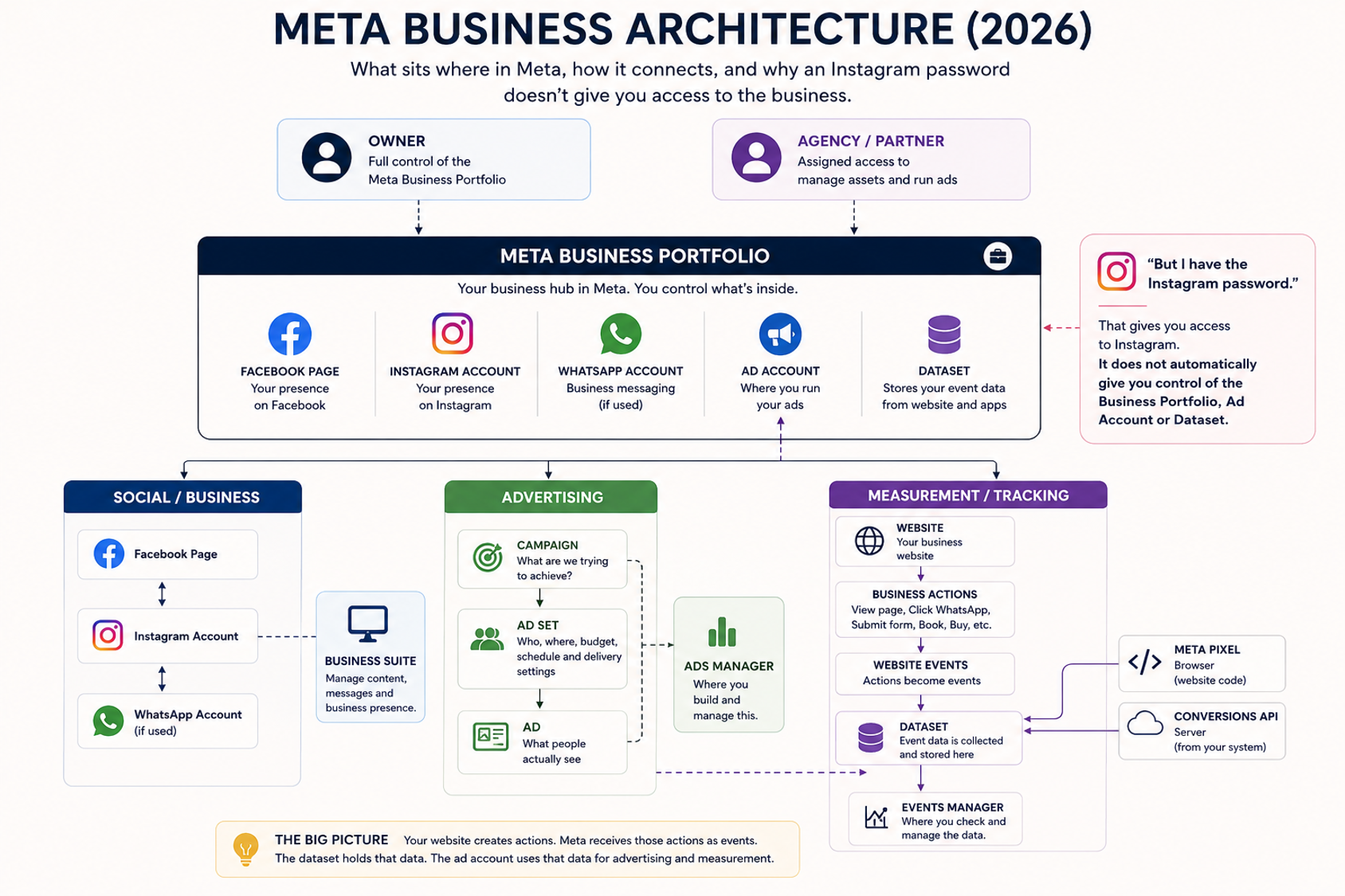
Tu Portafolio de negocio ocupa el centro. Es el titular de los activos del negocio, gestiona quién tiene acceso a ellos y conecta tu presencia en redes sociales, la publicidad y la medición en una sola estructura.
Controla la estructura. Después, controla el relato.
Cuando la titularidad está donde no debe, una agencia se lleva los activos al marcharse. Cuando la Cuenta publicitaria no está conectada al Dataset correcto, los anuncios se optimizan a partir de la señal equivocada. Cuando el Píxel está en el Portafolio de otra persona, no puedes ver tus propios datos.
El siguiente diagrama muestra cómo encajan esas piezas y cómo fluye la información entre ellas.
Más allá del diagrama
El diagrama explica dónde está cada elemento. Lo que no muestra es cómo trabajan juntos. Aquí es donde empieza buena parte de la confusión.
Tus canales sociales son tu presencia pública. Ayudan a que la gente descubra tu negocio, te siga y se ponga en contacto contigo. Aquí se desarrolla tu actividad orgánica. Genera notoriedad, confianza y relaciones, pero no es lo mismo que la publicidad.
La Cuenta publicitaria es donde se gestiona la publicidad de pago. Aunque los anuncios puedan aparecer en tu página de Facebook o en tu cuenta de Instagram, se crean, gestionan y optimizan por separado a través de la Cuenta publicitaria. Todas las campañas siguen la misma estructura: Campaña → Conjunto de anuncios → Anuncio. Aquí se definen los objetivos, se seleccionan las audiencias, se gestionan los presupuestos y se optimiza la entrega.
La medición acompaña a ambas actividades. Cada visita, consulta, reserva o compra en tu web puede registrarse mediante el Píxel de Meta y la API de conversiones. Esos eventos se almacenan en tu Dataset y se gestionan a través de Events Manager, proporcionando a Meta información sobre lo que ocurre después de que alguien haga clic en un anuncio.
Cuanto mejor sea esa información, mejor podrá aprender Meta. Si la medición de tu web está incompleta, Meta está optimizando, en la práctica, con un ojo cerrado. Si el Píxel, la API de conversiones y el Dataset trabajan juntos, Meta puede empezar a optimizar para conseguir consultas, reservas, compras o aquello que represente el éxito para tu negocio.
Aquí es también donde tu web pasa a formar parte de tu publicidad. Tu web deja de ser solo un destino. Se convierte en una fuente de aprendizaje que aporta información a todas las campañas futuras.
Por último, esto cambia la forma de elaborar tus informes.
Muchos negocios se centran en los seguidores, los «me gusta» y las impresiones porque son las cifras que ven a diario. Pueden ser útiles, pero por sí solas no te dicen si tu marketing está generando valor para el negocio.
Los informes orientados a resultados de negocio van más allá. Conectan el rendimiento de las campañas con las consultas, las reservas, las compras, los ingresos y el retorno de la inversión publicitaria. También conectan Meta con Google Analytics y con el conjunto de informes de tu negocio, ofreciendo una visión mucho más completa de lo que realmente está aportando tu inversión.
El Portafolio de negocio no es simplemente donde gestionas Facebook e Instagram.
Es donde tu presencia en redes sociales, la publicidad y la medición se unen en un único sistema de negocio conectado.
Entender estas tres funciones explica por qué se confunden tan a menudo la titularidad, los permisos y la medición. Las aplicaciones pueden parecer conectadas, pero detrás de ellas cada parte cumple una función distinta.